
By Gaurang Shah
Every few months in Brampton and Mississauga, the same house shows up twice. Same address, same layout, new photos, new MLS number. Nothing about the property changed. What changed is the Days on Market counter, which just went back to zero.
I watch this happen every season. A listing runs its course, doesn’t sell, and instead of asking the one question that actually matters, it gets a new set of photos, sometimes a new agent, and goes back on the market at the same number it just failed at.
Who This Is For
Your home was listed in Brampton, Mississauga, or elsewhere in Peel Region, and it expired or you pulled it and terminated the agreement. You are trying to decide whether to relist as is, switch agents, drop the price, or wait it out. This is for you.
Quick Answer
If your listing expired or was terminated, price is almost always the real reason, even when photos, staging, or timing get the blame. Relisting with a new agent, new photos, or a quiet reset at the same number does not fix that. It delays the moment you have to face the actual number. Before you relist, run a fresh comparison against homes that have actually sold in your area in the last 30 days, not what your home was worth when you first listed it.
Last Reviewed: August 2026
The days-on-market and market figures in this article reflect TRREB’s Market Watch report for July 2026, published August 6, 2026 and the most recently reported data at the time of writing. Confirm current figures with your listing agent before making a pricing decision.
On This Page
Why Listings Actually Expire
Agents blame a lot of things when a listing dies. The price is rarely one of them, at least not out loud.
The usual list of suspects shows up first: the photos weren’t good enough, the staging wasn’t right, it was the wrong season, the marketing wasn’t aggressive enough. Some of that matters at the margins. None of it is the main story.
According to Zillow’s research on pricing and time on market, homes that sold quickly were priced close to what they eventually sold for. Homes that sat for around two months sold roughly five percent under their original list price, and homes that lingered the longest sold well into double digits under what the seller first asked. The pattern holds: the longer a home sits, the worse the eventual number gets. Waiting does not protect the price. It usually costs more of it.
Staging still matters, just not in the way most sellers think. The National Association of Realtors’ most recent staging survey found close to half of sellers’ agents saw homes sell faster after staging, and roughly three in ten saw offers come in noticeably higher. That is a real, measurable lift. It is also a secondary one. A well-staged, overpriced home still sits. A plainly furnished, correctly priced home still sells.
I’ve never had a buyer walk away from a home they loved because the throw pillows were wrong. I’ve had plenty walk away because the number didn’t make sense next to the house three doors down that sold for less, two weeks faster.
What Terminated and Relisted Actually Mean
These words get used interchangeably. They shouldn’t be.
An expired listing ran out its full term without selling. A terminated listing ended early, usually by mutual agreement between the seller and the brokerage. A cancelled listing is similar, ended before the term was up. A relisted property is any of the above, put back on the market, usually with a brand new MLS number.
None of these labels describe what actually went wrong. They describe how the previous attempt ended, not why. If you want the full vocabulary for reading market reports and listing data, our guide to TRREB market terms covers Days on Market and the other terms that show up in this conversation.
What Relisting Resets, and What It Doesn’t
A new MLS number resets one thing. It does not reset the house.
When a listing is terminated and put back on the market, the system usually assigns it a new MLS number, and the public-facing Days on Market counter starts over. On paper, it looks brand new.
In practice, it isn’t. TRREB itself tracks this distinction: its Property Days on Market figure is defined as the number of days a property was on the market before selling, counted regardless of whether it was listed more than once by the same seller and brokerage during the original contract period. That is exactly why the gap between Listing Days on Market and Property Days on Market widens when relisting is common. Tools like HouseSigma also show a property’s full listing history to anyone who looks, buyers included. A serious buyer’s agent will check. If your home has been listed twice at the same price six weeks apart, they will know, and they will use it at the negotiating table.
This is also part of why the Canadian Real Estate Association’s cooperation policy requires that once a property is being publicly marketed, it goes on the MLS system within three days. The rule exists partly to prevent the version of this where a listing quietly gets pulled and pre-marketed as coming soon to reset the clock without changing anything about the price or the pitch.
A new MLS number is not a new house.
The Holdover Clause Most Sellers Forget About
This is the part that catches sellers off guard when they try to leave.
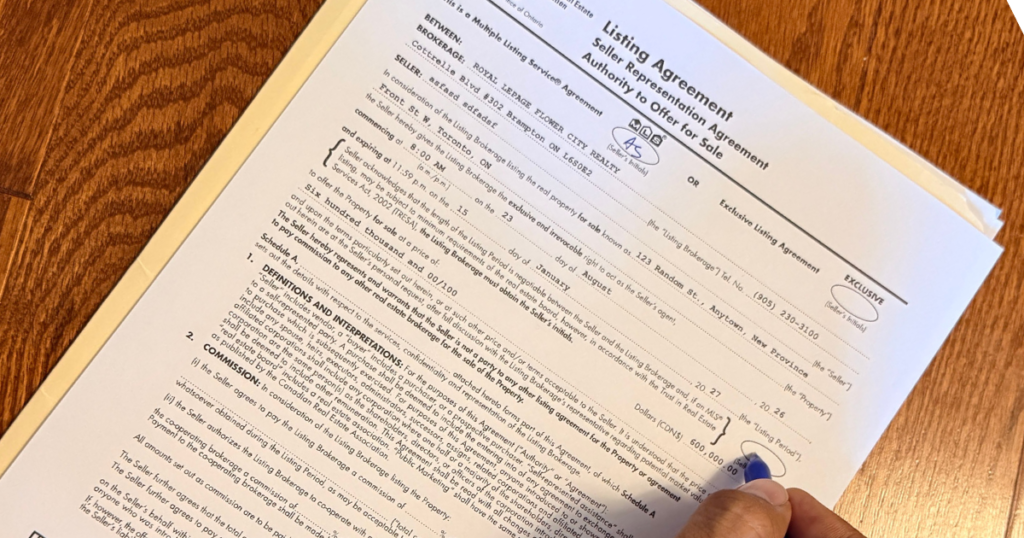
When a listing agreement expires or is terminated, most contracts include a holdover clause. According to Ontario’s Real Estate Council, this generally means that if you sell to a buyer who was introduced to your property during the original listing period, and the sale happens within the holdover window after the agreement ends, you may still owe commission to your original brokerage, even if you have since signed with someone else. The length of that window is negotiable, and in practice it commonly runs somewhere in the 60 to 90 day range, but the exact number is set out in your specific listing agreement, not by a standard rule.
This is not a reason to avoid switching agents. It is a reason to actually read the termination paperwork, and to tell your new agent which buyers already saw the home the first time around, so nobody gets surprised by a commission dispute later. If you’re also weighing what a price change or a second commission would do to your bottom line, the seller net sheet calculator can show you the actual math before you decide, and our article on what sellers actually net after selling walks through the rest of the closing-cost picture.
Three Paths After a Termination
At this point, sellers usually pick one of three roads. Only one of them actually works.
| Path | What It Looks Like | The Catch |
|---|---|---|
| Relist, same price | New listing date, same number | Nothing changed for buyers either |
| New agent, same price | New marketing, sometimes a new brokerage | Buyer’s agents can see the price repeat in the history |
| Reprice to current comps | Honest reset, fresh photos, current number | Requires facing the number now instead of later |
The upside of relisting quickly is that you keep some momentum going. The trade-off is that if the price hasn’t changed, the momentum doesn’t either.
Relisting with a new agent, new photos, and the same price is not a new strategy. It’s the same problem with a fresh coat of paint.
The Right Way to Reset a Listing
If you’re going to relist, do it properly, not quietly.
Before you relist, confirm:
- A fresh comparison against homes that have sold in your area in the last 30 days, not six months ago, using a current market evaluation
- New photos that reflect the current season and condition of the home
- An honest conversation about staging, focused on what actually shows poorly, not a full redecorate
- A price that reflects what buyers are paying right now, not what the home was worth when you first listed
- A clear plan for the first two weeks back on market, since that is when a listing gets the most attention it will ever get
Want to Know What Buyers Are Actually Paying Right Now?
Call or text before you relist.
Key Takeaways
- Price is the main reason listings expire, not photos, staging, or timing.
- A new MLS number resets the public Days on Market count. It does not erase the listing history buyers and their agents can see, and TRREB’s own Property Days on Market figure is built to capture relistings.
- Holdover clauses can mean commission is still owed to your original brokerage for a window after termination. Read your agreement.
- Relisting without repricing rarely produces a different result.
- The strongest relist is a repriced, honestly presented listing in its first two weeks back on market.
Bottom Line
A terminated listing isn’t a verdict on your home. It’s information. It tells you the number didn’t match what buyers were willing to pay, right now, in this market. Relisting without acting on that information just delays the same conversation. Relisting with a number that matches today’s comparable sales gives your home the best shot it will get.
Do I have to pay commission if I relist with a different brokerage after my listing expires?
Possibly, depending on your holdover clause. If a buyer who saw your home during the original listing ends up purchasing it within the holdover window, your original brokerage may still be owed commission. Check your specific agreement or ask your representative directly.
Does relisting reset my home’s days on market?
The public-facing Listing Days on Market counter resets with a new MLS number, but TRREB’s Property Days on Market figure and tools like HouseSigma still reflect the full listing history.
Is there a required waiting period before I can relist in Ontario?
No standard waiting period applies once a previous listing has been properly ended and a new listing agreement is signed.
Will buyers know my home was on the market before?
Most serious buyers, and virtually all buyer’s agents, will check. Assume they will see it, and plan your pricing and presentation accordingly.
Ready to Reprice This the Right Way?
No pressure, no pitch. Just the numbers, and a straight answer about what your home is worth in today’s market. Start with the Seller’s Guide or reach out directly. Consultations are available in English, Hindi, Gujarati, Marathi, and Punjabi.
Email: mail@myshahteam.com | Contact Us
References
- Toronto Regional Real Estate Board (TRREB), Market Watch, July 2026
- Zillow Research, “The Price of Overpricing: How Listing Price Impacts Time on Market”
- National Association of Realtors, 2025 Profile of Home Staging
- Real Estate Council of Ontario (RECO), holdover clause guidance
- Canadian Real Estate Association (CREA), REALTOR Cooperation Policy
