By Gaurang Shah
Every open house I run in Brampton, someone eventually ends up standing at the basement door asking the same question. Recently it happened again. A buyer stopped mid-tour and said, “Does this house have a legal basement?” My read: that’s the most expensive four-word question in the entire transaction, and most people asking it don’t know why.
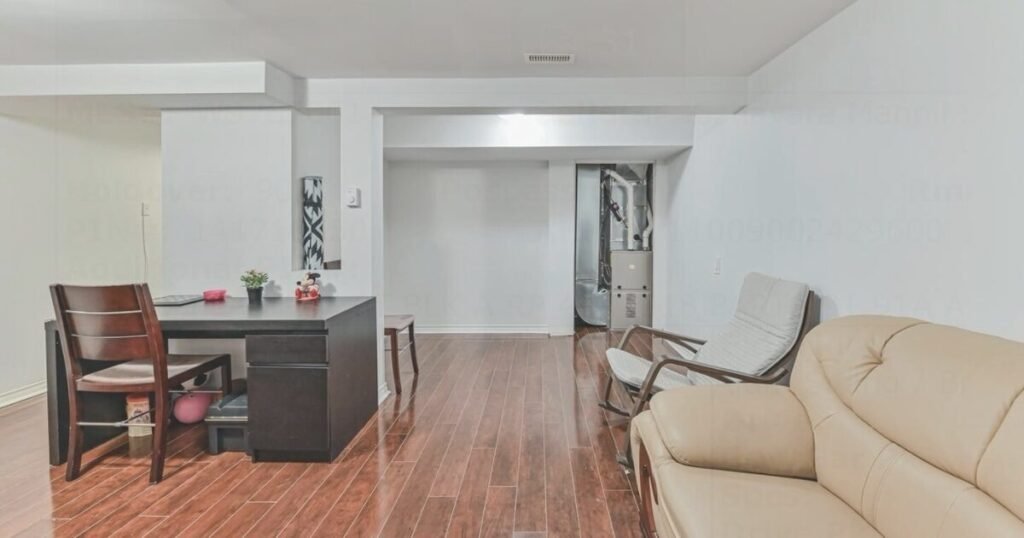
Here’s what he was actually looking at. The basement was finished: drywall, flooring, pot lights, the usual. It was ready for personal use as a rec room, but it had no washroom and nothing else that would let it function as a separate rental unit. It was never permitted as a second unit. A nice space, but not a legal apartment, and not close to one.
That’s the gap that trips people up constantly, and I don’t think it’s talked about honestly enough. A finished basement and a legal basement apartment can look the same in twenty minutes of walking through a house. They are not remotely the same asset. One adds living space. The other adds permitted rental income, and everything that comes with proving it’s permitted: egress windows, fire separation, a paper trail at the city that says this was actually inspected, not just built.
The buyer’s real questions weren’t only about drywall. He wanted to know how to check whether a basement is actually legal, and whether it’s worth paying more for a house where that work is already done, instead of buying the cheaper version and legalizing it himself later. That’s the real question underneath the question, and it’s worth answering properly.
A Brampton buyer touring resale homes with a finished basement, trying to figure out whether “finished” means “legal,” and whether it’s worth paying more for a house where that work has already been done properly.
A finished basement and a legal basement apartment are two different products wearing the same drywall. In Brampton, legal status requires two separate steps: registering the unit with the city, and, if it’s rented, a residential rental licence. If a listing can’t show both, you’re buying a rec room with potential, not a confirmed income suite. Whether that’s worth a lower price or a dealbreaker depends on what you actually plan to do with the space.
Ontario’s Building Code requirements below reflect the 2024 Building Code (O. Reg. 163/24), in force since January 1, 2025, which replaced the earlier 2012 Code. Brampton’s registration and rental licensing rules reflect the city-wide Residential Rental Licensing program in effect since January 1, 2026. Confirm current fees and requirements directly with the City of Brampton before relying on them for a purchase decision.
What Actually Makes a Basement Apartment Legal
This is where I ask every buyer the same question: are you looking at a basement, or a second dwelling unit? They’re not interchangeable, and the Ontario Building Code treats them very differently.
Under the current Building Code (the 2024 Code, which replaced the 2012 version on January 1, 2025), a legal second unit has to clear a specific set of technical requirements, not just look finished:
- Ceiling height: minimum 1.95 metres in the main living areas, 1.85 metres under beams and ductwork.
- Egress windows: every bedroom without a direct exterior door needs a window that opens from the inside without tools, with a minimum openable area and clearance in front of it if it sits in a window well. This is the single most common reason a nice-looking basement fails inspection.
- Fire separation between units: typically a minimum 30-minute fire-resistance rating between the basement unit and the unit above it, unless the whole house has interconnected smoke alarms, which can reduce the requirement.
- A safe way out: either a dedicated exterior entrance, or a shared interior exit that’s properly separated so a tenant downstairs isn’t forced to walk through the upstairs unit’s living space to escape a fire.
None of that shows up on a walkthrough. You can stand in a beautifully finished basement and have no idea whether the ceiling clears code, whether that window actually counts as egress, or whether the drywall between floors is doing anything beyond hiding the joists.
What this means: the visual condition of a basement tells you almost nothing about its legal status. Only the paperwork does.
Brampton’s Two-Step Rule Most Buyers Have Never Heard Of
This is the part that surprises even experienced buyers, and it’s specific to Brampton. Legal status here isn’t one approval. It’s two, and they’re separate.
Step one: Brampton additional residential unit (ARU) registration. Every additional residential unit in Brampton, including basement apartments, has to be registered with the city under the Additional Residential Units Registration By-law. Registration confirms the unit meets the Building Code and zoning by-law. The current cost is a $200 registration fee plus a $1,186.24 building permit fee for a standard two-unit dwelling. Brampton’s zoning by-law currently allows up to three units on a single-family lot.
Step two: the rental licence. As of January 1, 2026, Brampton expanded its Residential Rental Licensing program city-wide. Any rental property with one to four units, including a rented basement apartment, needs a licence, separate from the registration. The application fee is currently waived, so this costs nothing to obtain, but it still has to be done. A seller can have a fully registered, code-compliant basement apartment and still be operating it illegally if they never applied for the rental licence.
Before this expanded city-wide, the licensing requirement only applied to specific wards. If you’re looking at a listing that’s been rented for a few years, it’s worth asking specifically whether the licence was ever obtained, not just whether the unit was registered. Those are two different questions with two different answers.
The upside of buying a property with both boxes checked is real: verified rental income you can actually use for mortgage qualification, and no surprise compliance costs after closing. The trade-off is that fully compliant properties usually cost more, because the seller has already absorbed the cost of getting there.
How to Check Before You Write an Offer
You don’t have to take a listing’s word for it, and you shouldn’t. Brampton keeps a public map of every registered additional residential unit, searchable by address, so you can check registration status before you ever call your agent. That tells you whether the unit is on file. It does not tell you whether the rental licence was obtained, and it does not catch a unit that was altered after it was approved.
For anything beyond a quick check, request a Compliance Letter from the city’s Building Division. This can answer specific questions about zoning, open permits, and work orders, but it does not certify that a particular basement apartment is fully approved. Ask for the unit’s ARU registration or occupancy documentation as well, along with its permit and inspection history, since that’s the kind of thing your lawyer should be pulling as part of due diligence before closing, not something you assume someone else is checking.
Practical checklist. Before you waive conditions on a house with a basement apartment, confirm:
- The unit appears on Brampton’s registered ARU map for that address
- A Residential Rental Licence is current, if the unit is being rented
- The permit and inspection history match what’s actually built, since renovations after approval can void the original sign-off
- Egress windows are present in every basement bedroom, not just the main living area
- Fire separation was inspected, not just installed
- Your lawyer has requested a compliance letter as a condition of closing
- If claiming rental income for mortgage qualification, your lender has confirmed what documentation they require
A checklist like this does two things. It gives you something concrete to verify before you call me. And it tells you, honestly, whether you’re in a position to move forward on your own or whether you need help reading what the city’s records actually say.
Is It Worth Paying More for a Legal Basement Apartment?
This is the real question underneath the open-house question, and it doesn’t have one right answer.
The case for paying more: a legal secondary suite can let a lender count a meaningful portion of the rental income toward your mortgage qualification, which can be the difference between qualifying for the home you want and settling for less. You also avoid the cost, time, and uncertainty of legalizing it yourself later, which can run from a few thousand dollars for a single egress window to well into five figures if the ceiling height requires underpinning.
The case for buying the unfinished or unpermitted version: if you’re not planning to rent the space out, none of this matters as much. A rec room is a rec room. You’re paying a premium for a legal status you may never use. And if you’re comfortable managing a permit application yourself, buying the cheaper version and legalizing it on your own timeline can work out ahead financially, as long as you go in with your eyes open about the cost and the process.
The upside is flexibility and income potential. The trade-off is the price gap and the paperwork gap you’re either paying someone else to close, or closing yourself.
A legal basement apartment isn’t a nicer version of a finished one. It’s a different asset with a different price tag, and the only way to tell them apart is the paperwork, not the paint.
Want to Know What a Legal Basement Apartment Could Mean for Your Numbers?
If you’re comparing two Brampton listings, one with a registered and licensed basement unit and one without, the real comparison isn’t the sticker price. It’s what each one does to your monthly number and your qualifying income. Run both scenarios through our Mortgage Calculators before you decide, or walk through it with me directly so you’re comparing the actual numbers, not just the asking prices. For the full picture on financing and offer strategy, our Buyer’s Guide is a good next stop.
Key Takeaways
- A finished basement and a legal basement apartment are not the same purchase, even when they look identical.
- Brampton requires two separate approvals: ARU registration and, if rented, a city-wide Residential Rental Licence as of January 1, 2026.
- The city’s public ARU map lets you check registration status yourself before making an offer.
- Rental income only counts toward mortgage qualification when the suite is legal, not just finished.
- Whether the premium for a legal unit is worth it depends on whether you actually plan to rent the space.
Bottom Line
The buyer at that open house wasn’t really asking about drywall and paint. He was asking whether he could trust what he was looking at, and whether it was worth paying more to stop guessing. That’s the right instinct. The answer isn’t the same for every buyer, but the process for getting there is the same for everyone: check the registration, check the licence, and don’t let a nicely finished room stand in for a paper trail it doesn’t have.
Ready to Talk Through a Specific Listing?
Whether you’re comparing two Brampton homes or trying to read what a listing’s basement paperwork actually shows, let’s go through it together. No pressure, no pitch. Just the numbers and the facts.
You can also browse our full Buyer’s Guide for everything else to know before you offer.
Services available in English, Hindi, Gujarati, Marathi, and Punjabi.
FAQs
Does a finished basement automatically mean it’s a legal second unit?
No. A basement can be fully finished with drywall, flooring, and lighting and still fail to meet Building Code requirements for a legal second unit, including egress windows, ceiling height, and fire separation between floors.
How do I check if a basement apartment in Brampton is registered?
Brampton maintains a public map of registered additional residential units, searchable by address. For a more complete check, request a Compliance Letter through the city’s Building Division, and ask for the unit’s ARU registration or occupancy documentation and permit and inspection history as well.
Does a legal basement apartment help me qualify for a mortgage?
It can. Lenders generally require documented proof that a suite is legal, such as a building permit and occupancy documentation, before they’ll count rental income from it toward your mortgage qualification. An unpermitted suite’s income typically can’t be used.
Is it expensive to legalize an existing unpermitted basement?
It depends entirely on what’s missing. Adding an egress window can run a few thousand dollars. If the ceiling height doesn’t meet minimum requirements, underpinning the foundation can run tens of thousands. There’s no fixed number because every basement is different.